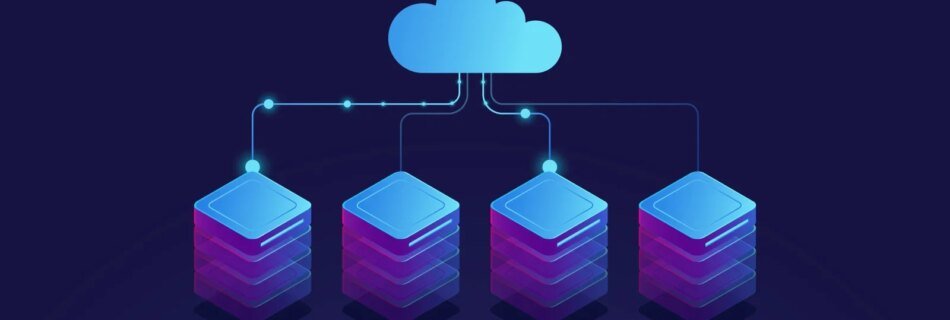
datacenter

Scaling Supabase & PostgreSQL for High-Throughput Read/Write Workflows

Introduction As application traffic scales, relational databases like PostgreSQL often become the primary bottleneck. While managed platforms like Supabase significantly reduce operational overhead, maintaining sub-10ms query execution during massive concurrent read/write surges requires deliberate architectural design. In this playbook, we break down the exact strategies we deploy at Isotope Blue to scale Supabase and PostgreSQL …

Call Center

Zero-Hallucination RAG Pipelines for Customer Support Architecture

Executive Summary Deploying Large Language Models (LLMs) into customer-facing support roles presents a major operational risk: hallucinations. When a support bot invents a non-existent refund policy or gives incorrect technical instructions, it destroys customer trust and creates legal liabilities. Standard out-of-the-box LLM prompts cannot reliably prevent hallucinations. Achieving enterprise-grade accuracy requires a guarded Retrieval-Augmented Generation …

Welder worker welding pipeline constructions

Programmatic Cold Outreach Pipeline from Scratch

Introduction Traditional B2B cold outreach relies on manual effort: sales development reps (SDRs) manually copying contacts from LinkedIn, pasting them into spreadsheets, running manual email verification, and manually sending sequences. This approach is slow, error-prone, and impossible to scale without expanding headcount linearly. At Isotope Blue, we treat client acquisition as a software engineering challenge. …

Megaphone

Integrating Voice AI into Legacy Telephony Stacks: An Architectural Blueprint

Executive Summary Deploying LLMs for web chat or text workflows is relatively straightforward. However, bringing real-time, conversational Voice AI into legacy telephony infrastructure—such as traditional PBX systems, SIP trunks, and PSTN lines—introduces a major technical bottleneck: latency. Human conversation relies on turn-taking pauses between 200ms and 800ms. If an automated voice agent takes 2 to …

abstract-data-visualization

Bi-Directional CRM Webhooks: Replacing Manual Data Entry with Event Logic

Executive Summary Manual lead entry, bulk CSV imports, and delayed CRM updates are operational vulnerabilities. When a high-intent prospect submits a form, requests a demo, or engages with an outreach campaign, a multi-hour delay in sales follow-up drastically degrades conversion rates. Relying on human data entry or standard scheduled polling intervals creates data silos and …

networking

Building an Agentic AI Lead Qualification Engine with RAG and Vector Search

Traditional B2B lead qualification is fundamentally broken. Standard web forms push static contact details into a CRM, where sales reps waste hours manually researching prospect websites, qualifying buyer intent, and sending repetitive scheduling emails. On the flip side, basic chatbot widgets rely on rigid rule trees that frustrate high-value prospects and fail when asked complex …

Coffee

Architecting High-Converting Dynamic Landing Funnels on Next.js

Executive Summary Static landing pages suffer from a major conversion flaw: they present identical copy and value propositions to vastly different audience segments. A enterprise CTO clicking a LinkedIn ad for data compliance has completely different pain points than a Head of Growth searching for automated outreach scripts. In this playbook, we break down how …

Help Customer Support Service

Why Monolith CMS Builds Fail at Scale (And How Headless Solves It)

Executive Summary For over a decade, monolithic Content Management Systems (CMS) like WordPress, Drupal, and traditional web builders were the default choice for web development. They allowed non-technical users to publish content quickly and offered thousands of plug-and-play plugins. However, as businesses scale—expanding into global markets, handling high concurrent traffic, and integrating complex APIs—the monolithic …

Retro black alarm clock

Configuring GCP Docker Clusters for Zero-Downtime Deployment

A Practical Guide to Production-Grade CI/CD, Container Orchestration, and Automated Failovers. Deploying software updates to production should be a non-event. Yet, monolithic server restarts, unhandled database migrations, and improper load balancing routinely trigger service interruptions, dropped WebSocket connections, and 502 gateway errors. Achieving true zero-downtime deployment requires isolating your application runtime, automating continuous delivery, and …